Padel vs Pickleball in the USA: Which One Wins in 2026?
Padel vs pickleball in the USA: court infrastructure, player demographics, learning curve, social dynamics, pricing. The honest comparison American players need.
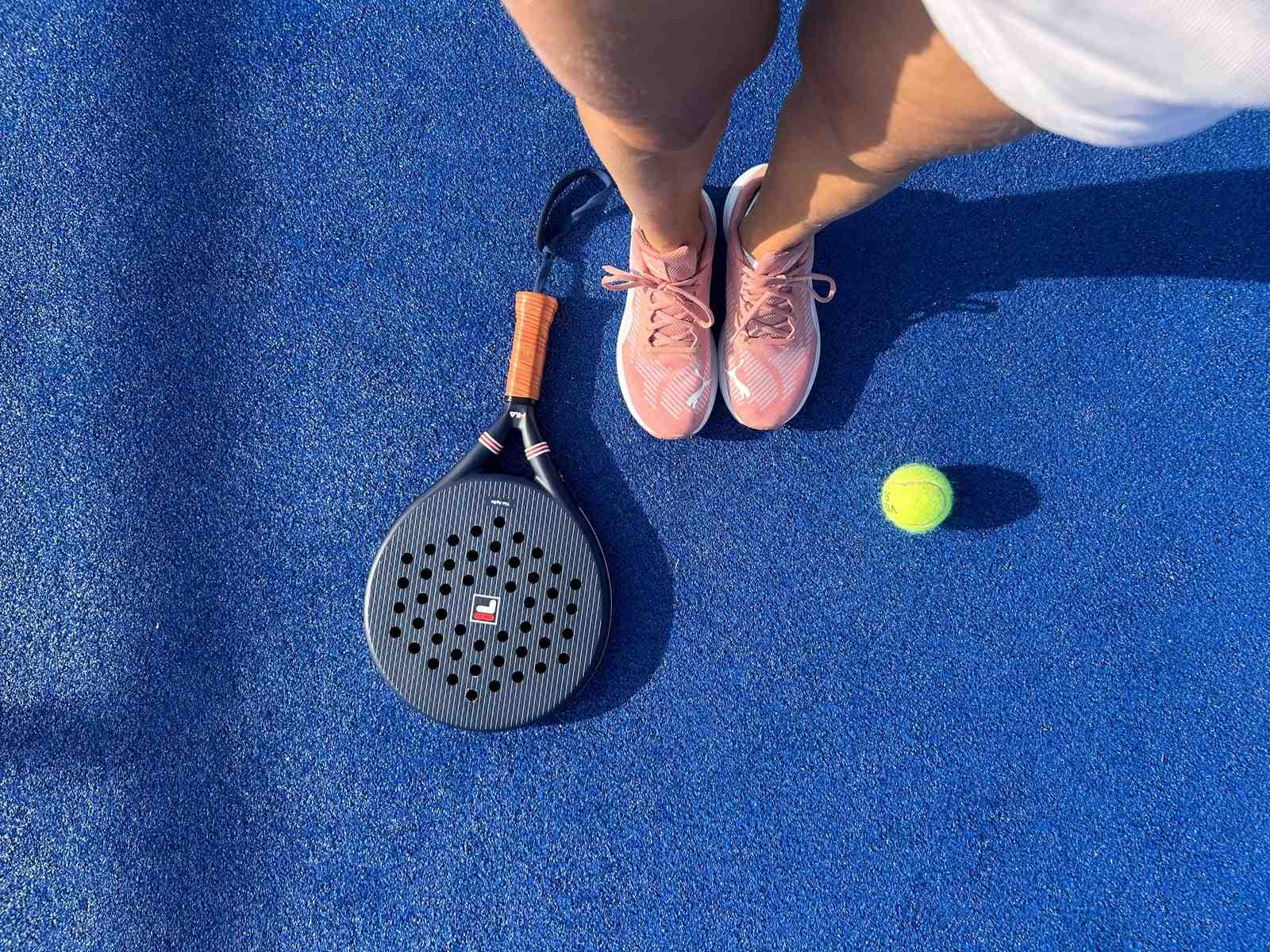
The American racquet sport landscape has been transformed in the last five years by two sports: pickleball, which scaled from regional curiosity to national phenomenon between 2018 and 2023, and padel, which only started its serious US growth in 2022 but is now America's fastest-growing sport by percentage. If you're new to racquet sports, or just curious whether to commit to one or play both, the honest comparison matters. This guide breaks down padel vs pickleball across the dimensions that actually affect your decision: infrastructure, learning curve, social dynamics, pricing, and long-term trajectory.
The two sports in one paragraph each
Pickleball is a paddle sport played on a 20'x44' court with a low net, a perforated plastic ball, and solid composite paddles. Doubles is the dominant format. Points are short, the ball moves slowly relative to tennis, and the game emphasizes positioning, soft touch, and patience over power. Originated in 1965 in Washington State, pickleball exploded between 2018 and 2023 to become America's fastest-growing sport by participation, over 13 million American players in 2026.
Padel is a racquet sport played on a 65'x33' enclosed glass court that allows the ball to be played off the walls (similar to squash but with significantly different mechanics). Doubles is the only competitive format. The ball is similar to a tennis ball, the racquet is a solid perforated paddle, and the strategic dimension comes from using the walls to extend rallies and create angles. Originated in 1969 in Mexico, padel exploded globally in Spain and Latin America from the 2000s onward, and only seriously arrived in the US around 2022.
Both are doubles-focused, both are fundamentally social and accessible to mixed athletic abilities, and both are growing rapidly in the US. The differences in how, where, and at what cost you play are significant.
Infrastructure: pickleball wins by an order of magnitude
This is the most consequential difference. The US has more than 50,000 pickleball courts in 2026, most of them converted from existing tennis or basketball facilities, with conversion costs as low as $500-2,000 per court. Pickleball courts are everywhere: public parks, community centers, retirement communities, private clubs, repurposed warehouses.
The US has 700+ dedicated padel courts in 2026. Padel courts cannot be cheaply converted from existing infrastructure: the enclosed glass walls, dedicated dimensions, and specific surface make new construction the norm. A purpose-built padel court costs $60,000-100,000 to construct.
Practical impact: in most American suburbs, finding a pickleball court within a 10-minute drive is trivial. Finding a padel court often requires a 20-40-minute drive even in major metros, and the chosen venue is typically a private club requiring booking.
For the foreseeable future, padel will remain the more difficult sport to access in terms of physical court availability. This shapes everything else.
Learning curve: padel rewards depth, pickleball rewards entry
A new pickleball player can rally meaningfully after one session. The court is small, the ball is slow, and basic forehand and backhand strokes generate enough control for sustained points. Within 5-10 sessions, casual players are competent enough to enjoy real games. The skill ceiling exists but is reached relatively quickly. Competitive pickleball is highly tactical, but the gap between "competent recreational" and "competitive amateur" is narrower than in most racquet sports.
A new padel player needs 3-5 sessions to play coherent points using the walls. The tactical dimension of when to play the wall, when to attack, when to lob, and how to position with a partner takes meaningful study. The skill ceiling is significantly higher: padel rewards continued learning over years, with elite professional play featuring tactics that simply don't exist in pickleball.
Practical impact: if you want to play tonight and have fun immediately, pickleball wins. If you want a sport you can grow into for a decade, padel offers more depth.
Social dynamics: both excellent, different character
Both sports are profoundly social, which is largely why they've grown so fast. But the social character differs.
Pickleball tends toward inclusive, multi-generational, drop-in social play. Public courts often run open play sessions where anyone can join, partners rotate every few games, and the culture welcomes new players actively. The age range is broad: pickleball is the dominant racquet sport at retirement communities and senior centers, but younger demographics are increasingly active too. Mixed-ability play is normal.
Padel tends toward more competitive, organized doubles culture. Players form regular partner pairings, book recurring slots together, and progress through level systems (Playtomic uses ELO 0-7 globally). The age range trends younger and more affluent, particularly in US markets where padel is concentrated in upscale venues. Mixed-ability play happens but isn't the default.
Practical impact: if you're looking for a casual social sport with low barriers to entry, pickleball wins. If you're looking for a structured competitive sport with regular partners and progression, padel wins.
Pricing: padel is significantly more expensive
This reflects the infrastructure differential.
Pickleball pricing: most public courts are free. Private indoor venues typically charge $5-25 per session per person. Annual club memberships range from $200-1,000 depending on facility quality. The total cost of being a regular pickleball player is modest.
Padel pricing: court hours cost $60-150 per court at premium US venues, split among 4 players ($15-37 per person per hour). Court rental is the dominant cost: there's no equivalent to "show up at the public court for free." Annual club memberships at premium venues can run $1,500-5,000.
Practical impact: pickleball is comparable in cost to a gym membership or yoga classes. Padel in the US is comparable to golf or premium fitness club costs. For a regular player, the annual cost differential is several thousand dollars.
Court access and booking: padel needs automation, pickleball doesn't
Because padel courts are scarce in the US and prime-time demand exceeds supply, booking padel at popular venues has become competitive. In NYC Manhattan and Brooklyn, Miami Beach and Brickell, and LA Beverly Hills and Santa Monica, prime-time slots disappear within 1-3 minutes of the Playtomic booking window opening.
This is exactly the problem that booking automation solves. Padel Snipe monitors the booking window opening for each Playtomic-connected US padel club and fires the booking request the moment the window opens, significantly faster than any manual user. For prime-time padel slots in major US cities, this is increasingly the only reliable strategy.
Pickleball doesn't have an equivalent problem at most venues. Court abundance and drop-in play culture mean pickleball booking is rarely competitive. Some premium indoor pickleball venues do see prime-time competition, but the dynamic is much less acute than padel.
Try Padel Snipe for free
Set up your first alert in 2 minutes. No credit card required.
Get started for free →Geographic patterns: where each sport dominates
Pickleball strongholds: nationwide. Strongest in California, Florida, Arizona, Texas, and across the South. Retirement and Sun Belt demographics drive significant participation. Pacific Northwest (the sport's birthplace) maintains a strong scene.
Padel strongholds: Miami metro (50+ venues), NYC metro (30+), LA Westside (20-25), Texas major cities (Houston, Dallas, Austin), DC, Boston, Bay Area. Concentration in cosmopolitan metros with Latin American populations or international business communities. See our guides for NYC, Miami, and Los Angeles for venue specifics.
If you live in suburban America without a major metro nearby, pickleball is likely your only realistic racquet sport option. If you live in a major metro, both are accessible but padel will require more travel and money.
Long-term trajectory: both grow, different ceilings
Pickleball trajectory: continued growth toward 15-20 million American players by 2030. The sport will become a permanent fixture in community recreation infrastructure. Professional pickleball will grow but unlikely to reach NBA-level cultural significance. Pickleball will remain the mass-market accessible racquet sport.
Padel trajectory: continued growth toward 500,000-1,000,000 American players by 2030. US padel courts likely to reach 2,500-3,500 by 2030. Padel will likely surpass tennis as the premium racquet sport in major US metros. Premier Padel and the global pro tour will sustain cultural momentum. Padel won't match pickleball's participation numbers but will compete for a different demographic and value proposition.
The two sports will coexist comfortably with different positioning: pickleball as the inclusive mass-market sport, padel as the premium competitive social sport. Many serious racquet sport players in major metros will play both: pickleball for casual social play, padel for structured competitive play.
Which one should you play?
The honest answer depends on your situation.
Play pickleball if: you want a racquet sport you can start tonight at no cost, you live in suburban or smaller-metro America, you value casual drop-in social play, you're new to racquet sports or returning after years away, you want to play with a wide age range of partners.
Play padel if: you live in a major US metro with venues, you have $1,500-5,000 annually for a serious racquet sport, you value structured competitive play with regular partners, you want a sport with deep tactical complexity and a high skill ceiling, you enjoy the social rituals of organized doubles culture.
Play both if: you live in a major metro, you have the budget and time, and you want the full racquet sport spectrum. Many committed racquet sport players in NYC, Miami, LA, and similar markets play both. The skill transfer is partial (padel rewards different tactical instincts than pickleball) but the joy of either sport doesn't diminish the other.
Bottom line
Pickleball is winning the American racquet sport revolution by participation numbers and infrastructure. Padel is winning the cultural premium category in major US metros. Both will keep growing through 2030. If you're a player asking "which one," the right answer depends on where you live, what you can spend, and what kind of racquet sport experience you want.
If you've decided on padel and you live in a major US metro, the practical next step is identifying the Playtomic-connected venues near you and getting set up with Padel Snipe for the prime-time slots that disappear in seconds. For the broader picture of US padel growth, see our guide to booking a padel court in the US.
External sources: USA Pickleball Association, USA Padel Federation, Premier Padel.
Ready to automate your bookings?
Set up your first alert in 2 minutes. Free to start.
Get started for free →